Frequently Asked Questions
Helping seekers, pastors, and readers understand the LUMEN vision of God as holy love.
1. What is the LUMEN theological vision?
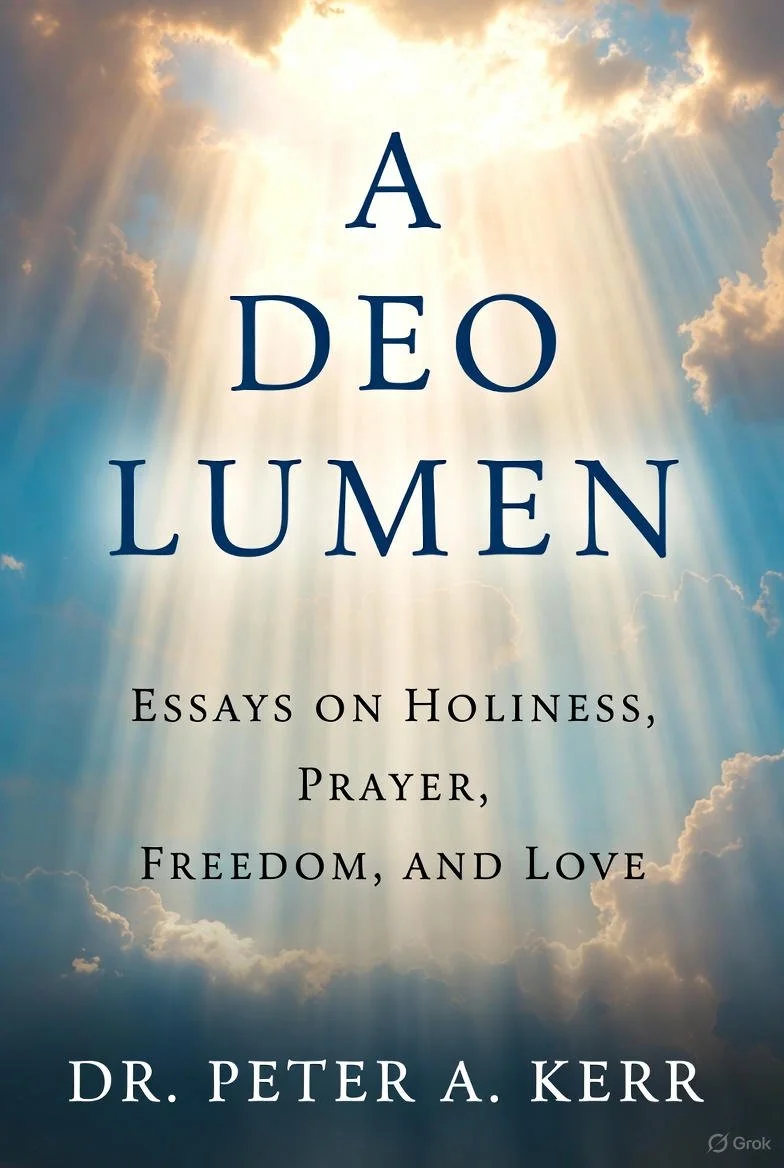
LUMEN is a way of seeing God as holy love—God’s fullness of goodness, truth, and love shared eternally among Father, Son, and Spirit. Rather than beginning with fear, control, or human sin as the center, LUMEN starts with God’s radiant plenitude. Everything else—creation, salvation, holiness, prayer, and human freedom—flows from God’s abundant self-giving.
2. Is LUMEN a new denomination or movement?
No. LUMEN is not a denomination, faction, or theological club. It is a grammar—a way of talking about God that emphasizes Christlike, non-coercive love. Christians from Reformed, Wesleyan, Catholic, and Eastern Orthodox traditions can all embrace its insights without leaving their church homes.
3. How does LUMEN understand God’s holiness?
Holiness in LUMEN is not distance or severity. It is fullness—the radiant goodness, truth, and love of the triune God. God’s holiness is life-giving, inviting, and generative. It is not something that pushes people away but something that draws us into communion.
4. How does LUMEN describe divine power?
LUMEN rejects coercive views of divine power. God does not force, dominate, or override human freedom. Divine power is the overflow of God’s plenitude—power expressed as generosity, illumination, patience, and love. Jesus’ life becomes the clearest model for how God uses power.
5. Does LUMEN weaken the seriousness of sin?
Not at all. LUMEN intensifies the seriousness of sin. Sin is not merely breaking rules—it is the distortion of love, the wounding of relationships, and the shrinking of the soul. Grace never enables stagnation. It empowers transformation (1 John 3:6–9).
6. Does LUMEN teach universalism?
No. LUMEN teaches the wideness of God’s love and the reality of human freedom. God desires all to be saved (1 Tim 2:4), but God does not coerce love. Salvation is possible for all and forced on none. This avoids both despair and presumption.
7. What role do spiritual disciplines play in LUMEN?
Spiritual disciplines are not punishments; they are training in love. Practices like prayer, fasting, Scripture meditation, worship, and service strengthen the will, renew the mind (Rom 12:2), and enlarge the heart. They help us become more fully human and more able to love God and neighbor.
8. How does LUMEN understand human freedom?
Human freedom is not merely the ability to choose. It is the creaturely capacity to participate in God’s love. Freedom is a gift designed for communion, not autonomy. God honors the freedom He gives, which is why divine love never manipulates.
9. How does LUMEN interpret patience in the Christian life?
Patience is central. It is a form of self-gift in which we literally “die” to control, pace, and ego—offering our time as love. This reflects God’s own long-suffering toward the world (2 Pet 3:9), and it is the first descriptor of love in 1 Cor 13:4.
10. How does LUMEN help people grow spiritually?
People grow as they receive God’s love, practice obedience as an act of affection (John 14:15), embrace disciplines that shape desire, and open their will to the Spirit’s indwelling presence. Growth is expected, possible, and beautiful because God’s grace transforms.
11. How does LUMEN differ from classical determinism or open theism?
LUMEN affirms God’s sovereignty without determinism and affirms human freedom without reducing God’s power. Divine action is non-coercive, not limited. God empowers creatures rather than overshadowing them. This avoids both extremes.
12. Is LUMEN compatible with historic Christianity?
Yes. LUMEN draws from Scripture, the early Church Fathers, and classical doctrines like the Trinity, simplicity, and divine fullness. It does not overthrow tradition; it retrieves its deepest currents—especially the Christlike shape of divine love.
13. Why does LUMEN say “God is not after His own glory”?
LUMEN makes a crucial distinction: God has glory and God gives glory. Divine glory is radiant, not needy. It is the overflow of holiness, not the demand for recognition. God’s aim is to share life, not to extract praise.
14. How can I begin learning LUMEN personally?
Start by reading the website’s introductory essays, then begin practicing small, daily acts of non-coercive love—especially patience, forgiveness, generosity, and prayer that opens the heart to God’s radiance.
15. What problem is LUMEN trying to solve?
LUMEN addresses many of the main distortions common in many Christian contexts, to include:
Coercive images of God
Fear-based holiness
Moralism without transformation
It offers a hopeful alternative grounded in divine plenitude and Christ’s non-coercive love.