LUMEN Is Not Reformed, Liberal, or Revisionist
by Dr. Peter A. Kerr
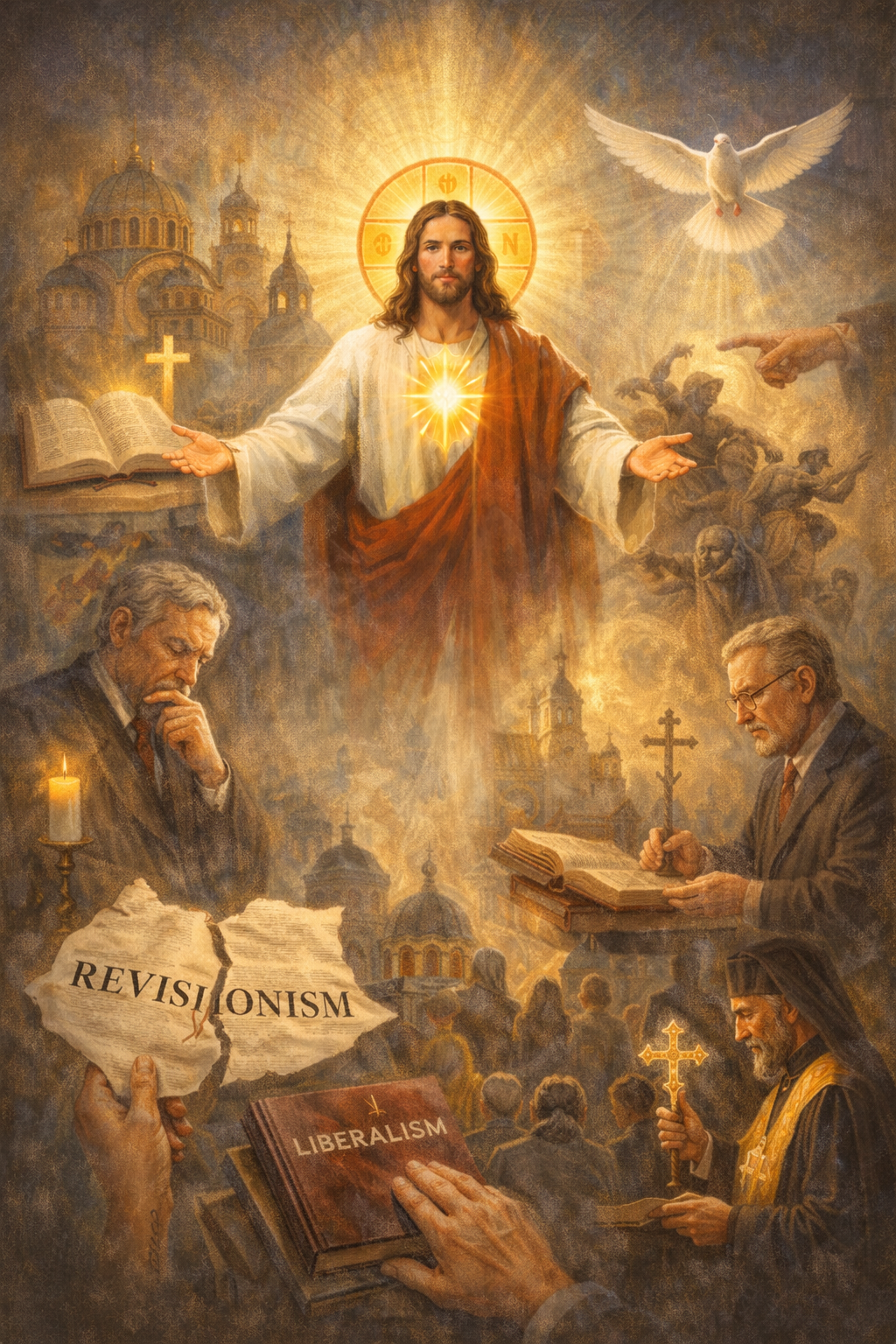
When a theological project resists easy classification, readers often reach for familiar labels. Is it Reformed? Is it liberal? Is it revisionist? These categories help orient expectations, but they can also obscure what is actually being proposed. LUMEN does not fit neatly into any of these camps—not because it rejects them wholesale, but because it begins from a different center.
LUMEN starts not with a system, a polemic, or a reaction, but with a confession: God is holy. Holiness in Scripture is not primarily about distance, control, or moral severity. It is fullness—goodness, truth, and love existing in perfect unity and abundance (Isa 6:3; Ps 99:3; 1 Jn 1:5). From this center, theology unfolds not as a mechanism for managing outcomes, but as a grammar (subtle organizing pattern) for participating in God’s life.
Why LUMEN Is Not Liberal
LUMEN is quite distinct from liberal theology. It does not treat doctrine as symbolic poetry, moral metaphor, or culturally conditioned myth. Scripture is not a loose collection of religious insights, but a coherent witness to God’s self-revelation across time (2 Tim 3:16; Luke 24:27). The resurrection of Christ is not an inspirational idea, but a real, history-shaping act of God (1 Cor 15:14–20).
LUMEN affirms the reality of sin, judgment, repentance, and salvation. It does not dissolve the gospel into ethics, nor does it flatten God into a projection of human ideals. Divine holiness is not negotiated by cultural preference, and truth is not determined by sincerity alone (Jn 14:6).
LUMEN even more starkly differs from liberal trajectories by refusing to reduce love to tolerance or affirmation without transformation. Love, in Scripture, heals, corrects, and draws creation into alignment with God’s goodness (Heb 12:10–11). Grace does not negate moral seriousness; it makes genuine holiness possible.
Why LUMEN Is Not Revisionist
LUMEN may be mistaken for revisionism because it challenges entrenched assumptions. Yet challenging assumptions is not the same as revising the faith. Revisionism replaces the center with something new; LUMEN recenters faith on God’s holiness. Revisionism sees something new; LUMEN focuses more on the full Bible, the Early Church fathers, and the broad consensus of historic Christianity. Its claims about holiness, love, participation, and divine patience echo themes found in Irenaeus, Athanasius, and the Cappadocians—often explaining concepts much closer to the early Church Fathers than to later systematizations.
LUMEN does not deny original Christian claims; it clarifies them. It does not discard doctrines like judgment, wrath, or atonement; it seeks to understand them coherently within the character of God revealed in Christ (Heb 1:1–3). It does not weaken the gospel; it resists distortions that quietly portray God as divided against Himself.
At its heart, LUMEN insists Jesus Christ is the definitive revelation of God’s nature. Whatever does not look like Christ crucified and risen must be reexamined, not preserved for the sake of tradition alone (Col 2:9; Jn 14:9).
A Different Starting Point
LUMEN is not Reformed, liberal, or revisionist because it does not begin with debates about control, culture, or correction. It begins with worship.
When God’s holiness is understood as holy love—abundant, patient, truthful, and free—many inherited tensions resolve themselves. Sovereignty and freedom no longer compete. Justice and mercy no longer conflict. Glory is no longer something God seeks, but something that arises when love is received (Jn 17:22–24).
LUMEN does not ask readers to abandon their tradition. It invites them to look again—together—at who God is, as He has shown Himself to be. From that shared center, conversation becomes possible, trust becomes rational, and faith becomes something not merely defended, but lived.
Isaiah 6:3 And one called out to another and said, “Holy, Holy, Holy, is the LORD of hosts, The whole earth is full of His glory.”
Psalm 99:3 Let them praise Your great and awesome name; Holy is He.
1 John 1:5 This is the message we have heard from Him and announce to you, that God is Light, and in Him there is no darkness at all.
Romans 3:23 for all have sinned and fall short of the glory of God.
Ephesians 2:8–9 For by grace you have been saved through faith; and that not of yourselves, it is the gift of God; not as a result of works, so that no one may boast.
Psalm 115:3 But our God is in the heavens; He does whatever He pleases.
Colossians 1:19–20 For it was the Father’s good pleasure for all the fullness to dwell in Him, and through Him to reconcile all things to Himself, having made peace through the blood of His cross; through Him, I say, whether things on earth or things in heaven.
Deuteronomy 30:19 “I call heaven and earth to witness against you today, that I have set before you life and death, the blessing and the curse. So choose life in order that you may live, you and your descendants.”
Matthew 23:37 “Jerusalem, Jerusalem, who kills the prophets and stones those who are sent to her! How often I wanted to gather your children together, the way a hen gathers her chicks under her wings, and you were unwilling.”
Romans 8:28 And we know that God causes all things to work together for good to those who love God, to those who are called according to His purpose.
Hebrews 12:6 FOR THOSE WHOM THE LORD LOVES HE DISCIPLINES, AND HE SCOURGES EVERY SON WHOM HE RECEIVES.
Ezekiel 18:23 “Do I have any pleasure in the death of the wicked,” declares the Lord GOD, “rather than that he should turn from his ways and live?”
2 Timothy 3:16 All Scripture is inspired by God and profitable for teaching, for reproof, for correction, for training in righteousness.
Luke 24:27 Then beginning with Moses and with all the prophets, He explained to them the things concerning Himself in all the Scriptures.
1 Corinthians 15:14–20 and if Christ has not been raised, then our preaching is vain, your faith also is vain. Moreover we are even found to be false witnesses of God, because we testified against God that He raised Christ, whom He did not raise, if in fact the dead are not raised. For if the dead are not raised, not even Christ has been raised; and if Christ has not been raised, your faith is worthless; you are still in your sins. Then those also who have fallen asleep in Christ have perished. If we have hoped in Christ in this life only, we are of all men most to be pitied. But now Christ has been raised from the dead, the first fruits of those who are asleep.
John 14:6 Jesus *said to him, “I am the way, and the truth, and the life; no one comes to the Father but through Me.”
Hebrews 12:10–11 For they disciplined us for a short time as seemed best to them, but He disciplines us for our good, so that we may share His holiness. All discipline for the moment seems not to be joyful, but sorrowful; yet to those who have been trained by it, afterwards it yields the peaceful fruit of righteousness.
Hebrews 1:1–3 God, after He spoke long ago to the fathers in the prophets in many portions and in many ways, in these last days has spoken to us in His Son, whom He appointed heir of all things, through whom also He made the world. And He is the radiance of His glory and the exact representation of His nature, and upholds all things by the word of His power. When He had made purification of sins, He sat down at the right hand of the Majesty on high.
Colossians 2:9 For in Him all the fullness of Deity dwells in bodily form.
John 14:9 Jesus *said to him, “Have I been so long with you, and yet you have not come to know Me, Philip? He who has seen Me has seen the Father; how can you say, ‘Show us the Father’?”
John 17:22–24 “The glory which You have given Me I have given to them, that they may be one, just as We are one; I in them and You in Me, that they may be perfected in unity, so that the world may know that You sent Me, and loved them, even as You have loved Me. “Father, I desire that they also, whom You have given Me, be with Me where I am, so that they may see My glory which You have given Me, for You loved Me before the foundation of the world.”
All Verses in NASB

Isaiah 6:3 And one called out to another and said, “Holy, Holy, Holy, is the LORD of hosts, The whole earth is full of His glory.”
Psalm 99:3 Let them praise Your great and awesome name; Holy is He.
1 John 1:5 This is the message we have heard from Him and announce to you, that God is Light, and in Him there is no darkness at all.
Romans 3:23 for all have sinned and fall short of the glory of God.
Ephesians 2:8–9 For by grace you have been saved through faith; and that not of yourselves, it is the gift of God; not as a result of works, so that no one may boast.
Psalm 115:3 But our God is in the heavens; He does whatever He pleases.
Colossians 1:19–20 For it was the Father’s good pleasure for all the fullness to dwell in Him, and through Him to reconcile all things to Himself, having made peace through the blood of His cross; through Him, I say, whether things on earth or things in heaven.
Deuteronomy 30:19 “I call heaven and earth to witness against you today, that I have set before you life and death, the blessing and the curse. So choose life in order that you may live, you and your descendants.”
Matthew 23:37 “Jerusalem, Jerusalem, who kills the prophets and stones those who are sent to her! How often I wanted to gather your children together, the way a hen gathers her chicks under her wings, and you were unwilling.”
Romans 8:28 And we know that God causes all things to work together for good to those who love God, to those who are called according to His purpose.
Hebrews 12:6 FOR THOSE WHOM THE LORD LOVES HE DISCIPLINES, AND HE SCOURGES EVERY SON WHOM HE RECEIVES.
Ezekiel 18:23 “Do I have any pleasure in the death of the wicked,” declares the Lord GOD, “rather than that he should turn from his ways and live?”
2 Timothy 3:16 All Scripture is inspired by God and profitable for teaching, for reproof, for correction, for training in righteousness.
Luke 24:27 Then beginning with Moses and with all the prophets, He explained to them the things concerning Himself in all the Scriptures.
1 Corinthians 15:14–20 and if Christ has not been raised, then our preaching is vain, your faith also is vain. Moreover we are even found to be false witnesses of God, because we testified against God that He raised Christ, whom He did not raise, if in fact the dead are not raised. For if the dead are not raised, not even Christ has been raised; and if Christ has not been raised, your faith is worthless; you are still in your sins. Then those also who have fallen asleep in Christ have perished. If we have hoped in Christ in this life only, we are of all men most to be pitied. But now Christ has been raised from the dead, the first fruits of those who are asleep.
John 14:6 Jesus *said to him, “I am the way, and the truth, and the life; no one comes to the Father but through Me.”
Hebrews 12:10–11 For they disciplined us for a short time as seemed best to them, but He disciplines us for our good, so that we may share His holiness. All discipline for the moment seems not to be joyful, but sorrowful; yet to those who have been trained by it, afterwards it yields the peaceful fruit of righteousness.
Hebrews 1:1–3 God, after He spoke long ago to the fathers in the prophets in many portions and in many ways, in these last days has spoken to us in His Son, whom He appointed heir of all things, through whom also He made the world. And He is the radiance of His glory and the exact representation of His nature, and upholds all things by the word of His power. When He had made purification of sins, He sat down at the right hand of the Majesty on high.
Colossians 2:9 For in Him all the fullness of Deity dwells in bodily form.
John 14:9 Jesus *said to him, “Have I been so long with you, and yet you have not come to know Me, Philip? He who has seen Me has seen the Father; how can you say, ‘Show us the Father’?”
John 17:22–24 “The glory which You have given Me I have given to them, that they may be one, just as We are one; I in them and You in Me, that they may be perfected in unity, so that the world may know that You sent Me, and loved them, even as You have loved Me. “Father, I desire that they also, whom You have given Me, be with Me where I am, so that they may see My glory which You have given Me, for You loved Me before the foundation of the world.”
All Verses in NASB