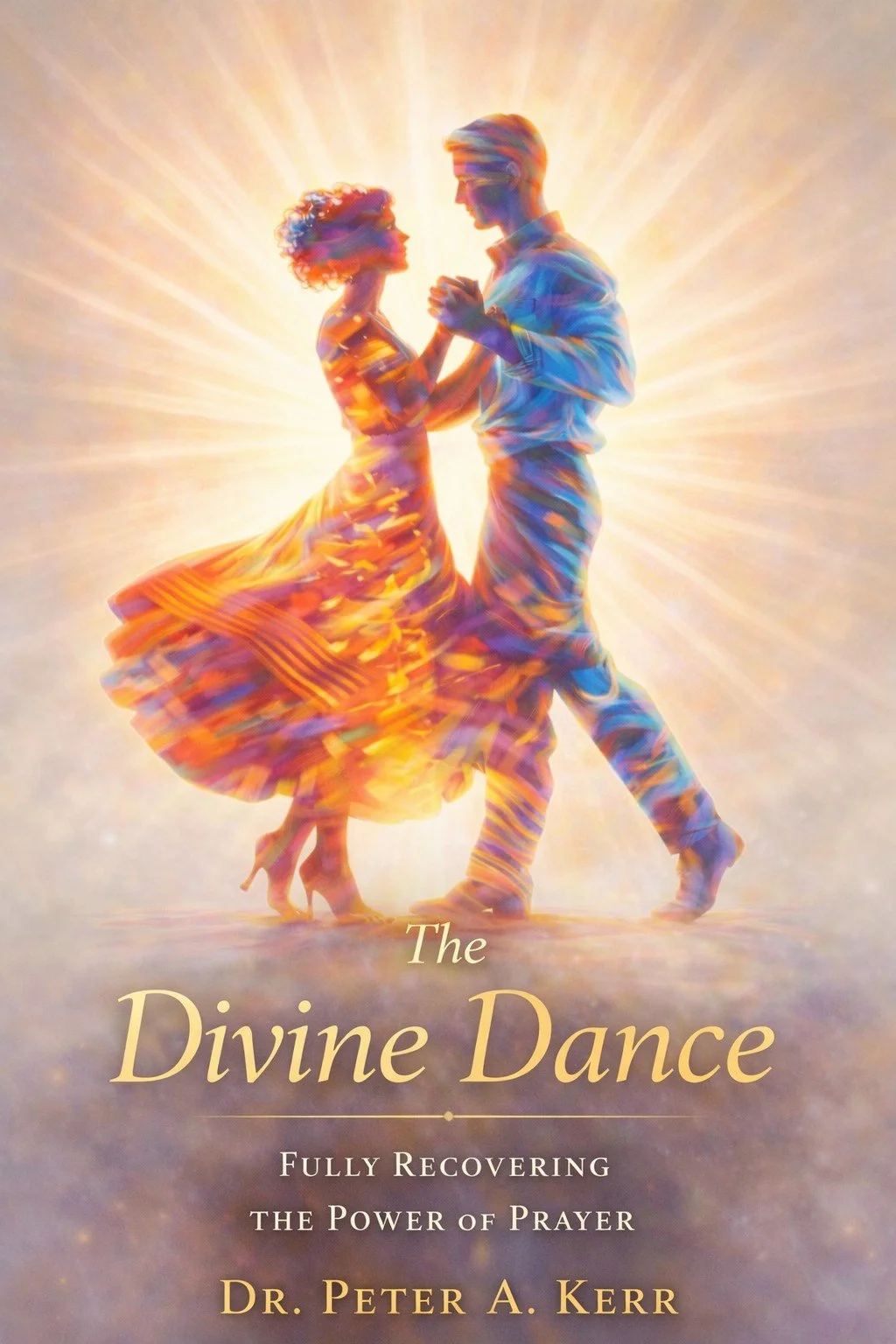
God is Lord of the Dance
by Dr. Peter A. Kerr
Most of us were taught to think of prayer as asking—asking God to do something, fix something, or change something. But prayer is far closer to dancing than it is to bargaining. It is not about forcing movement; it is about learning the rhythm.
Prayer begins with the conviction that God is already moving toward us. The Holy Spirit is not silent or distant. The Spirit is the music—steady, patient, and alive—always inviting, always encouraging, never shouting. Some hear it clearly while others barely notice it. Prayer is the practice of listening more deeply until the music becomes unmistakable.
When the dancer is in synch with the music it is beautiful. There are graceful flourishes and amazing leaps. The dance of life, when tuned in to the Spirit, is a wonderous joy.
Prayer is not changing God’s heart but joining Him to get His will done. Prayer attunes us to His will, and follows His lead. Like dancers leaning in to catch the beat, prayer trains us to recognize where the Spirit is already heading. Over time, we begin to move with confidence, not because we control the dance, but because we trust the One who set it in motion.
Prayer also helps others hear the music. A good dancer does not pull or shove a partner across the floor. They offer presence, timing, and invitation. In the same way, intercessory prayer does not override another person’s will. Love never does that. Instead, prayer surrounds them with light. It softens the noise, clarifies the rhythm, and makes the next faithful step feel possible. No one is dragged into holiness—but many are gently drawn when the music becomes clearer.
God, however, does far more than play the music. He also shapes the dance floor itself. While never violating human freedom, God freely transforms circumstances. He opens doors and closes others. He introduces pauses, obstacles, and unexpected turns that invite reflection and reorientation. A sudden need arises. A conversation appears at just the right moment. A familiar path becomes blocked, forcing a turn that brings new life.
This is not manipulation; it is orchestration. God does not coerce the dancer, but He can rearrange the room. He can slow the tempo, change the lighting, or alter the space so that grace becomes easier to choose and destruction harder to pursue. The dance floor is fully transformable—even while every step remains freely chosen.
Prayer is how we stay in sync with all of this. It is listening more closely to the music, moving more freely with the rhythm, and helping others recognize the dance they were already invited into. Prayer does not force the dance. It makes the dance possible.
In the end, prayer is not about control. It is about communion. It is the joy of discovering that God has been leading all along—and that holy love always moves at the speed of invitation.
God is not after obedience alone—He wants obedience freely offered which is love (Jn 14:15). So He sets us free. “So if the Son makes you free, you will be free indeed” (Jn 8:36). God would rather plant a tree in Eden and lose paradise than force a human will, for to do so is to destroy the soul’s ability to love and to defeat the purpose of creation. Releasing Christians from determinism also means recovering the Bible’s persistent instruction that prayer truly matters. If God does not override our will, then we must make His will our will to get it done “on earth as it is in Heaven.” And that is our prayer. Join the dance—let’s follow the Spirit and make something extraordinarily beautiful even in this fallen world.
Application: Changing the Way We Pray
If prayer is participation rather than control, then we must pray differently. We no longer pray primarily to change people’s behavior, force repentance, or override resistance. Love does not work that way, and God does not work that way. Prayer becomes an act of alignment with God’s holy love—asking not that others be compelled, but that they be able to see.
We pray for opened eyes rather than bent wills. We ask that truth become clearer, that lies lose their grip, and that conscience awakens. We pray that the noise surrounding a person be softened so the Spirit’s quiet music can finally be heard. Rather than demanding outcomes, we intercede for illumination. Instead of pushing truth into people, we give them many chances to make a good choice. We also now understand how prayer is often fulfilled later or even differently than we requested.
We also pray for God to shape the surroundings. While God never violates freedom, He lovingly rearranges circumstances. He opens and closes doors, introduces pauses, interrupts destructive momentum, and brings timely encounters. Prayer invites God to prepare the “dance floor”—to make truth easier to recognize and harm harder to pursue, all while every step remains freely chosen.
This changes our posture in intercession. We pray with patience instead of anxiety, trust instead of desperation, hope instead of control. We release the burden of results and take up the practice of faithfulness. Our prayers become invitations rather than ultimatums.
In short, prayer is not about managing outcomes but cooperating with love. We pray to see clearly, to help others see, and to trust that God is already at work—moving gently, persistently, and beautifully toward redemption.
Prayer does not force the dance. It makes the dance possible.

Prayer Tip
One last important thought on prayer: The Bible is silent about silent prayer. Prayer is meant to be a conversation—out loud. It is not an inner dialogue. Yes, God hears your thoughts, but prayer in the Bible is spoken. Ask God what He wants to talk about. Take Him on a walk. Talk to Him out loud and you may find you start hearing Him talking back. Memorize the Bible and give the Holy Spirit a vocabulary to speak to your heart.