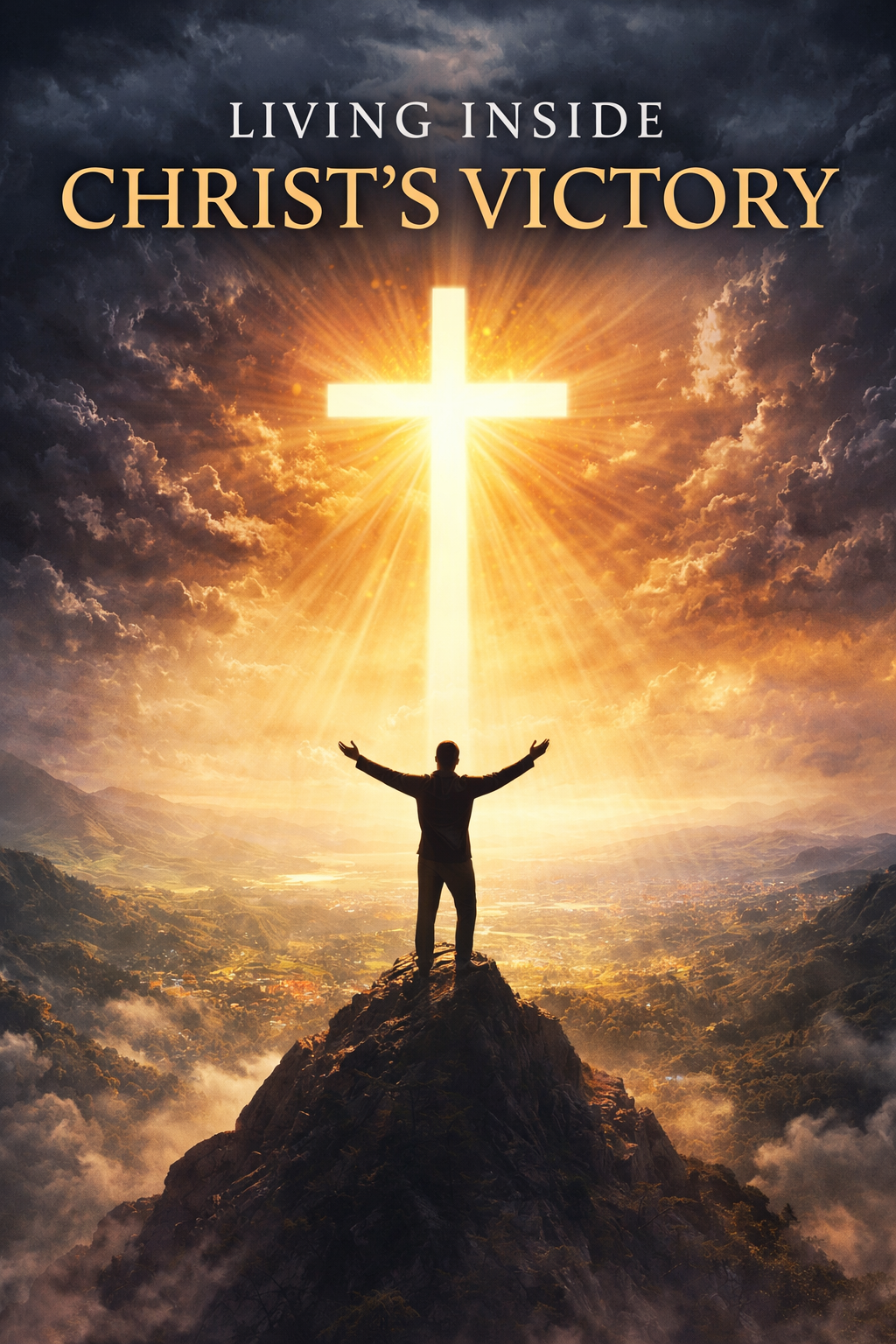
A Manifesto for Living Inside Christ’s Victory
by Dr. Peter A. Kerr
Most Christians have been taught how to be forgiven. Far fewer have been taught how to live as if Jesus actually won. We confess Christ died for our sins, that He rose from the dead, and that He reigns. Yet many of us quietly inhabit the world as though fear still holds the day, as though chaos has the final word, and as though our primary vocation is to endure until heaven arrives.
This manifesto begins with a simple claim: Jesus did not merely forgive us so we could wait for rescue. He restored our place in God’s world so we could learn to live inside His victory.
When Jesus went to the cross, something decisive happened not only to individual hearts but to the world itself. He declared, “Now is the judgment of this world; now the ruler of this world will be cast out.” Judgment, in this sense, did not mean God abandoning creation. It meant God confronting and removing an illegitimate ruler. The cross exposed false authority and dethroned it.
The world remains broken, but it is no longer ownerless. It no longer belongs to fear. Jesus did not conquer by force. He conquered through faithfulness, truth, and self-giving love. Such victory does not dominate; it restores.
To be Christian, then, is not merely to be forgiven. It is to be re-commissioned. Jesus does not replace human responsibility; He restores it. We are not spectators waiting for God to intervene from a distance. We are participants learning how God acts—through willing, faithful people.
This reframes everything. Prayer is not begging God to break in; it is alignment with what He is already doing. Obedience is not earning approval; it is cooperation with restored authority. Holiness is not mere rule-keeping; it is the formation of a life capable of carrying responsibility. Faith is not denial of reality; it is trust that God works through us rather than around us.
Why Is There Still Darkness?
Yet if Christ restored authority, why does the world still look so dark? Because authority is not the same as automation. Jesus removed the false ruler, but He did not bypass human participation. The world remains contested not because Christ failed but because love does not coerce. Evil imposes harm by force. God restores goodness by invitation.
Darkness persists wherever responsibility is avoided. Light spreads wherever faithfulness is practiced. This is not an accusation; it is an invitation.
Many assume power must look spectacular. In Christ’s kingdom, power often appears ordinary. It looks like telling the truth without fear. It looks like loving enemies without retaliation, healing without control, resisting temptation without shortcuts, and remaining faithful when violence would be easier.
Power in God’s kingdom is not the ability to dominate outcomes. It is the ability to bring life without becoming corrupted. This is why Jesus could promise that His followers would do greater works. Not louder works. Not flashier works. Greater works are deeper, slower, and more enduring. Jesus healed individuals. The church is meant to heal patterns. Jesus confronted demons. The church dismantles the conditions that grant them access.
Holiness, therefore, matters more than ever. It is not about appearing impressive. It is about becoming safe to entrust with life. Power without formation harms people. God refuses to give authority where love is not being learned. Holiness is how we become able to carry responsibility without damaging ourselves or others.
God is not withholding power. He is preparing people. This is why growth often feels slow and why shortcuts are dangerous.
Prayer, in this light, is not persuading a reluctant God. It is consenting to act with Him. When Jesus taught us to pray, “Your kingdom come. Your will be done. On earth as it is in heaven,” He was not teaching desperation but alignment. Prayer becomes the meeting point where heaven’s order enters places where human willingness is present.
Some prayers seem unanswered not because God is distant but because alignment is incomplete. That truth is not discouraging; it is empowering. It means our participation matters.
Restored Dominion has Begun
Dominion does not begin with grand plans for the world. It begins within reach—with our inner life, our relationships, our work, our words, our habits, and our responsibilities. We are not called to fix everything. We are called to be faithful where we stand. Authority grows where responsibility is embraced.
This vision requires refusal as well as embrace. We refuse despair that assumes nothing can change. We refuse triumphalism that demands instant results. We refuse fear-based religion that shrinks faith and power without love that corrodes souls. We refuse the idea that Christianity is merely about waiting quietly for escape.
Instead, we embrace patient faithfulness. We embrace prayer that seeks alignment rather than magic. We embrace holiness as formation rather than performance. We embrace love as the highest expression of authority. We believe Jesus meant what He said. We believe the ruler was truly cast out. We believe the Spirit empowers ordinary people to live differently.
Our hope rests here: the world is not abandoned. The church is not powerless. Your life is not insignificant. Christ reigns. The victory is real. The invitation continues.
We are learning to live inside what Jesus has already accomplished—not perfectly, not instantly, but faithfully. This is not a call to impress the world. It is a call to be responsible within it.
And that is how the world changes.