For God So Loved the World
by Dr. Peter A. Kerr
Some Christians today are being taught God does not truly love everyone. Others are taught He loves the elect more than the rest, as though divine love comes in graded doses. When most are pressed, they admit they have no idea why they are elect while others are not. When pressed further, they try to sound humble: they are “sinners saved by grace,” they still sin daily, and yet God supposedly loves them more than the damned. Something has quietly gone wrong when pastors preach contradictions this severe.
The Christian faith begins with the truth that God is love (1 John 4:8). God is not partly love, selectively love, or variably love. Divine love is simple, full, and undivided. Humans may use love to mean kindness or preference, yet Scripture speaks of agape as God’s own self-giving fullness—a love with no gradations, no rationing, and no partiality. As a teacher once said in a very different context, “Either you do or you don’t—there is no try.” If God loves, He loves in fullness. If God is love, He cannot “love most” or “love less.”
Before examining the biblical portrait of God, a crucial distinction must be made. People may use the word “God” and mean many things. That does not mean they are speaking of the God revealed in Scripture. I may share the name Peter with many people, yet I am only myself because of my characteristics. The same is true here. If any theology attributes to God characteristics that contradict the Father revealed in the Son and by the Spirit, it has quietly created another god.
This article is not written to condemn but to invite. Many sincere Christians have inherited distorted teachings, and Scripture warns that even Satan twists the word of God (Matthew 4:6). Any of us can be misled. The following arguments matter because they reveal the God who truly is. Once you see the truth, you become responsible for it. If your heart is unteachable, continuing will only deepen your resistance. If you are willing to let Scripture speak, the beauty of God’s love will become unmistakably clear.
1. The Trinity reveals who God is.
An historic marker of aberrant teaching is a distorted view of the Trinity. Mormons, Jehovah’s Witnesses, and others deny it entirely. Christianity confesses God the Father, God the Son, and God the Holy Spirit—three Persons, one God. When we see one, we see the fullness of all.
This raises unavoidable questions.
Was Jesus the perfect image and “the exact representation” of God’s nature (Hebrews 1:3)?
Did the “fullness of Deity” dwell in Him (Colossians 2:9)?
Did He say, “He who has seen me has seen the Father” (John 14:9)?
If so, Jesus reveals exactly what God is like. We must then answer honestly:
Does Jesus seek His own glory (John 8:50)? Does He coerce anyone or call down legions of angels to overpower others (Matthew 26:53)? Does He invite only a few or does He invite all (Matthew 11:28; John 7:37; Revelation 22:17)? Does He allow His followers to walk away (Mark 10:21–22; John 6:66–67)? Does He even love those who refuse Him (Mark 10:21; Luke 19:41–42)?
If Jesus reveals the Father, then these qualities are the character of God. A theological system that claims God chooses only a few to salvation, refuses to love all, refuses to invite all, or never lets anyone walk away is not describing the Christian God. It is describing a god unlike Jesus, and therefore unlike the Father. Any system that presents a god unlike Jesus—even unintentionally—has drifted from the Trinitarian faith. It describes someone other than the Father revealed in the Son.
2. God loves everyone with the fullness of His being.
Scripture could not be clearer.
God so loved the world (John 3:16).
God desires all people to be saved (1 Timothy 2:4).
God is patient, not wishing for any to perish (2 Peter 3:9).
God’s kindness is toward all He has made (Psalm 145:9).
If divine love comes from God’s fullness, then no human can be loved “more” or “less.” God has no degrees of holiness, goodness, or love. The simple, radiant plenitude of God’s character is always the same toward each person He has made.
3. Jesus died for all sins, not only the sins of the elect.
Scripture states this without qualification: “and He Himself is the propitiation for our sins; and not for ours only, but also for those of the whole world” (1 John 2:2). Jesus tasted death for everyone (Hebrews 2:9). God was in Christ reconciling the world to Himself (2 Corinthians 5:19). Christ died for all (2 Corinthians 5:14–15).
If Jesus did not die for someone, then God cannot sincerely invite that person to salvation. A universal invitation built on a selective atonement would be a divine deception. That is unthinkable for the God revealed in Jesus.
Some have tried to reinterpret the word “world,” but the Greek is quite clear. In Johannine usage, kosmos regularly refers to the fallen human order estranged from God (John 1:10; 3:17; 7:7), not a redeemed subset. God loves the world precisely in its rebellion. The word certainly does not mean “the elect.” It refers to every person, and even to His entire creation. God does not love the evil humans commit, yet He never stops loving the humans themselves. Love does not excuse sin; it seeks to heal it. I do not like when my son teases his sister, but I certainly never stop loving him because of it.
4. God shows no partiality.
Scripture is equally clear here. God shows no favoritism (Romans 2:11). He is no respecter of persons (Acts 10:34). Playing favorites is the opposite of justice. A God who arbitrarily selects eternal destinies is indistinguishable from a despot. The Christian God is righteous in all His ways and kind in all His deeds (Psalm 145:17). The idea that God loves a select few more than others contradicts His character at the deepest possible level.
5. The gospel invitation is universal, yet resistible.
Scripture proclaims both truths simultaneously. The invitation is universal: “Whoever believes” (John 3:16). The invitation is sincere: “Everyone who calls on the name of the Lord will be saved” (Romans 10:13). The invitation can be refused: “You were unwilling” (Matthew 23:37).
If God only chose a few beforehand, the universal offer would be hollow. If Jesus died only for a select group, the offer would be dishonest. God cannot invite people to a salvation He has not provided. Since Jesus died once for all (Hebrews 10:10), the invitation is real for all.
6. Perfect love drives out fear.
Christian proclamation does not rely on terror or manipulation. Perfect love drives out fear (1 John 4:18). Theologies that claim “God chose some and not others” while trying to frighten people with visions of hell become incoherent. If someone is not elect, no threat can help them. If they are elect, no threat is needed. Either way, fear is a useless tool.
The gospel does not scare people into heaven. The gospel invites them into the radiant love of God revealed in Christ.
A final word of invitation.
If you have believed God loves some more than others, or that Christ died only for a select few, the god you have been taught is smaller, narrower, and darker than the God who stands revealed in Jesus Christ. The true God is holy-love in eternal plenitude. His light reaches all. His love extends to all. His grace pursues all. His invitation is for all.
Seeing God this way changes everything. It honors Scripture. It clarifies the gospel. It heals the soul. It reveals a God worth worshiping—a God whose love is as wide as the world He made. If your heart is open, step into the light. The God who loves all loves you.
And remember this. No one in the New Testament is called “a sinner saved by grace.” That phrase never appears. Instead, it addresses us as saints—literally “holy ones”-- saved from sin. We are set apart by God and saved from sin, not defined by it (Romans 1:7; 1 Corinthians 1:2; Ephesians 1:1). “No one who is born of God practices sin, because His seed abides in him; and he cannot sin, because he is born of God. By this the children of God and the children of the devil are obvious: anyone who does not practice righteousness is not of God, nor the one who does not love his brother.” (1 Jn. 3:9-10). You can be forgiven past false beliefs and even forgiven for propagating false teachings. Simply repent—turn from the lies to the truth, and you will be made increasingly into a holy child of God.
In the end, Christ does more than forgive; He indwells. He does more than cover sin; He transforms the person. Our calling is to live into that destiny, allowing His life to reshape us from the inside out, until His holiness becomes the pattern of our own. As we reflect the God who has saved us, we will begin to love as He loves—freely, fully, and without partiality—because His own life has taken root within us and is growing us into His likeness (Galatians 2:20).
Supporting Scripture (NASB, 1995)
1 John 4:8 — The one who does not love does not know God, for God is love.
Hebrews 1:3 — And He is the radiance of His glory and the exact representation of His nature, and upholds all things by the word of His power. When He had made purification of sins, He sat down at the right hand of the Majesty on high.
Colossians 2:9 — For in Him all the fullness of Deity dwells in bodily form.
John 14:9 — Jesus said to him, "Have I been so long with you, and yet you have not come to know Me, Philip? He who has seen Me has seen the Father; how can you say, 'Show us the Father'?"
John 8:50 — But I do not seek My glory; there is One who seeks and judges.
Matthew 26:53 — Or do you think that I cannot appeal to My Father, and He will at once put at My disposal more than twelve legions of angels?
Matthew 11:28 — Come to Me, all who are weary and heavy-laden, and I will give you rest.
John 7:37 — Now on the last day, the great day of the feast, Jesus stood and cried out, saying, "If anyone is thirsty, let him come to Me and drink."
Revelation 22:17 — The Spirit and the bride say, "Come." And let the one who hears say, "Come." And let the one who is thirsty come; let the one who wishes take the water of life without cost.
Mark 10:21-22 — Looking at him, Jesus felt a love for him and said to him, "One thing you lack: go and sell all you possess and give to the poor, and you will have treasure in heaven; and come, follow Me." But at these words his face fell, and he went away grieving, for he was one who owned much property.
John 6:66-67 — As a result of this many of His disciples withdrew and were not walking with Him anymore. So Jesus said to the twelve, "You do not want to go away also, do you?"
Luke 19:41-42 — When He approached Jerusalem, He saw the city and wept over it, saying, "If you had known in this day, even you, the things which make for peace! But now they have been hidden from your eyes."
John 3:16 — For God so loved the world, that He gave His only begotten Son, that whoever believes in Him shall not perish, but have eternal life.
1 Timothy 2:4 — who desires all men to be saved and to come to the knowledge of the truth.
2 Peter 3:9 — The Lord is not slow about His promise, as some count slowness, but is patient toward you, not wishing for any to perish but for all to come to repentance.
Psalm 145:9 — The LORD is good to all, And His mercies are over all His works.
1 John 2:2 — and He Himself is the propitiation for our sins; and not for ours only, but also for those of the whole world.
Hebrews 2:9 — But we do see Him who was made for a little while lower than the angels, namely, Jesus, because of the suffering of death crowned with glory and honor, so that by the grace of God He might taste death for everyone.
2 Corinthians 5:19 — namely, that God was in Christ reconciling the world to Himself, not counting their trespasses against them, and He has committed to us the word of reconciliation.
2 Corinthians 5:14-15 — For the love of Christ controls us, having concluded this, that one died for all, therefore all died; and He died for all, so that they who live might no longer live for themselves, but for Him who died and rose again on their behalf.
Romans 2:11 — For there is no partiality with God.
Acts 10:34 — Opening his mouth, Peter said: "I most certainly understand now that God is not one to show partiality."
Psalm 145:17 — The LORD is righteous in all His ways And kind in all His deeds.
John 3:16 — (repeated above)
Romans 10:13 — for "Whoever will call on the name of the Lord will be saved."
Matthew 23:37 — Jerusalem, Jerusalem, who kills the prophets and stones those who are sent to her! How often I wanted to gather your children together, the way a hen gathers her chicks under her wings, and you were unwilling.
1 John 4:18 — There is no fear in love; but perfect love casts out fear, because fear involves punishment, and the one who fears is not perfected in love.
Matthew 4:6 — and said to Him, "If You are the Son of God, throw Yourself down; for it is written, 'He will command His angels concerning You'; and 'On their hands they will bear You up, So that You will not strike Your foot against a stone.'"
Romans 1:7 — to all who are beloved of God in Rome, called as saints: Grace to you and peace from God our Father and the Lord Jesus Christ.
1 Corinthians 1:2 — To the church of God which is at Corinth, to those who have been sanctified in Christ Jesus, saints by calling, with all who in every place call on the name of our Lord Jesus Christ, their Lord and ours.
Ephesians 1:1 — Paul, an apostle of Christ Jesus by the will of God, To the saints who are at Ephesus and who are faithful in Christ Jesus.
1 Jn. 3:9-10 — No one who is born of God practices sin, because His seed abides in him; and he cannot sin, because he is born of God. By this the children of God and the children of the devil are obvious: anyone who does not practice righteousness is not of God, nor the one who does not love his brother.
Galatians 2:20 — I have been crucified with Christ; and it is no longer I who live, but Christ lives in me; and the life which I now live in the flesh I live by faith in the Son of God, who loved me and gave Himself up for me.

=NOTE=
For your convenience, all Scripture referenced here is quoted in full below. “All Scripture is inspired by God and profitable for teaching, for reproof, for correction, for training in righteousness” (2 Tim. 3:16 NAS)
Five Biblical Truths About God’s Love
1. God loves the whole world—not a select few.
God so loved the world (John 3:16).
He desires all people to be saved (1 Timothy 2:4).
He is patient toward all, not wishing any to perish (2 Peter 3:9).
God’s love is universal because God’s fullness cannot be divided.
2. Jesus reveals exactly what the Father is like.
He is the radiance of God’s glory (Hebrews 1:3).
The fullness of Deity dwells in Him (Colossians 2:9).
He said, “He who has seen Me has seen the Father” (John 14:9).
When you look at Jesus, you are seeing how God loves.
3. Christ died for all sins—for the whole world.
He is the propitiation not only for our sins, but for the sins of the whole world (1 John 2:2).
He tasted death for everyone (Hebrews 2:9).
He died for all (2 Corinthians 5:14–15).
The atonement is universal because God’s grace is not selective.
4. God shows no favoritism and plays no favorites.
God is no respecter of persons (Acts 10:34).
There is no partiality with God (Romans 2:11).
The Lord is righteous in all His ways and kind in all His deeds (Psalm 145:17).
Divine love does not come in degrees or special categories.
5. The gospel invitation is truly open to every person.
Whoever believes will be saved (John 3:16).
Everyone who calls on the Lord will be saved (Romans 10:13).
Jesus cries out, “If anyone is thirsty, let him come” (John 7:37).
God’s love invites all, honors freedom, and never coerces.
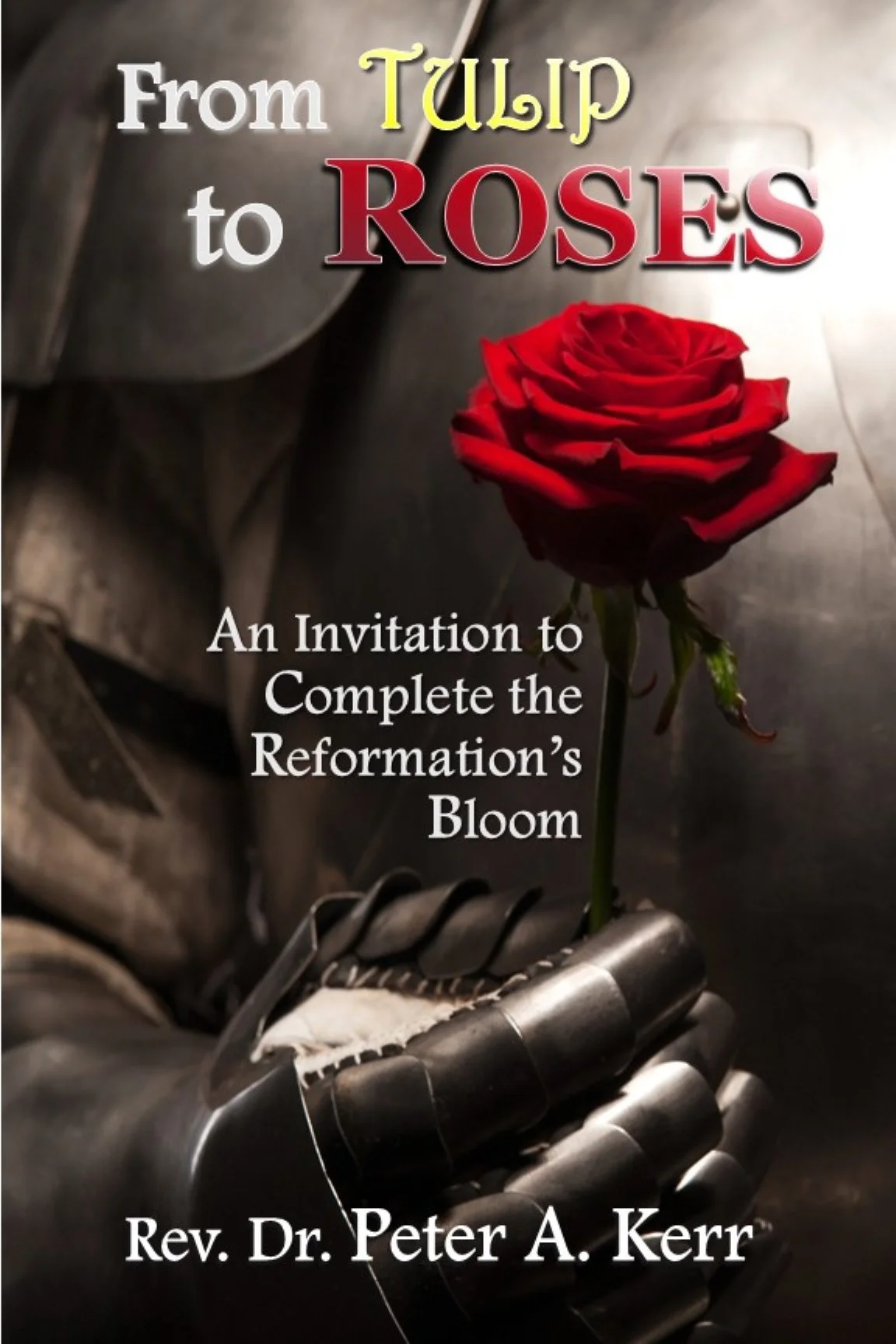
Need More Reasons to Believe God Loves All?
For many who have been raised in the deterministic traditions, it is hard to just accept truth from a small article like this. That makes sense. A wise Christian must also ask “what about the Scriptures I have been taught prove God is coercive and deterministic — and what does “the elect” mean?” If that is you, just keep seeking the truth. Pray. Read the Bible. Read the below article on misapplied verses.
Also consider clicking on the picture above and possibly buying this book that explains the issue in much more depth, to include refuting the top 15 verses used in deterministic systems and then showing 50 verses (10 each) that counter each of the points of TULIP. This is an invitation to see a God much more Holy, more loving, and even more sovereign than you have ever known. Please let the Spirit lead you to freedom.